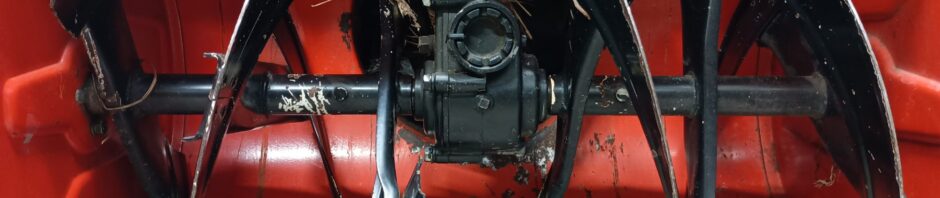
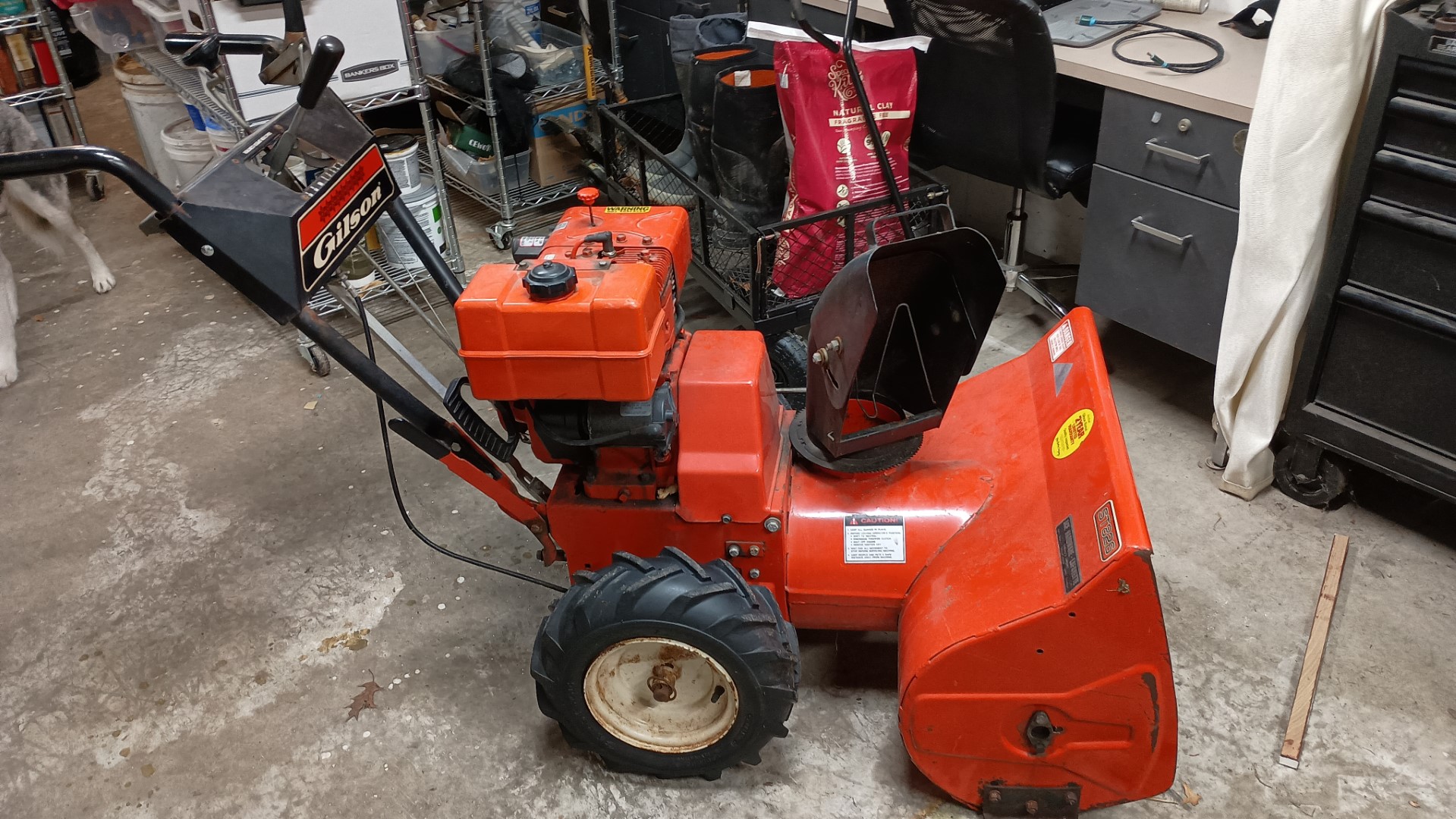
Gilson ST826
We found an old Gilson ST826 26 inch snow blower at the Purdue University salvage store, probably 10 years ago. It only cost us $75. They said it ran, but ran rough. So I figured I’d tinker with it to see if I could get it running.
Manufactured between 1986 and 1990, these things are beasts. Powered by a tried and true Briggs & Stratton 8 HP motor, they were known for their tough construction and transmission.
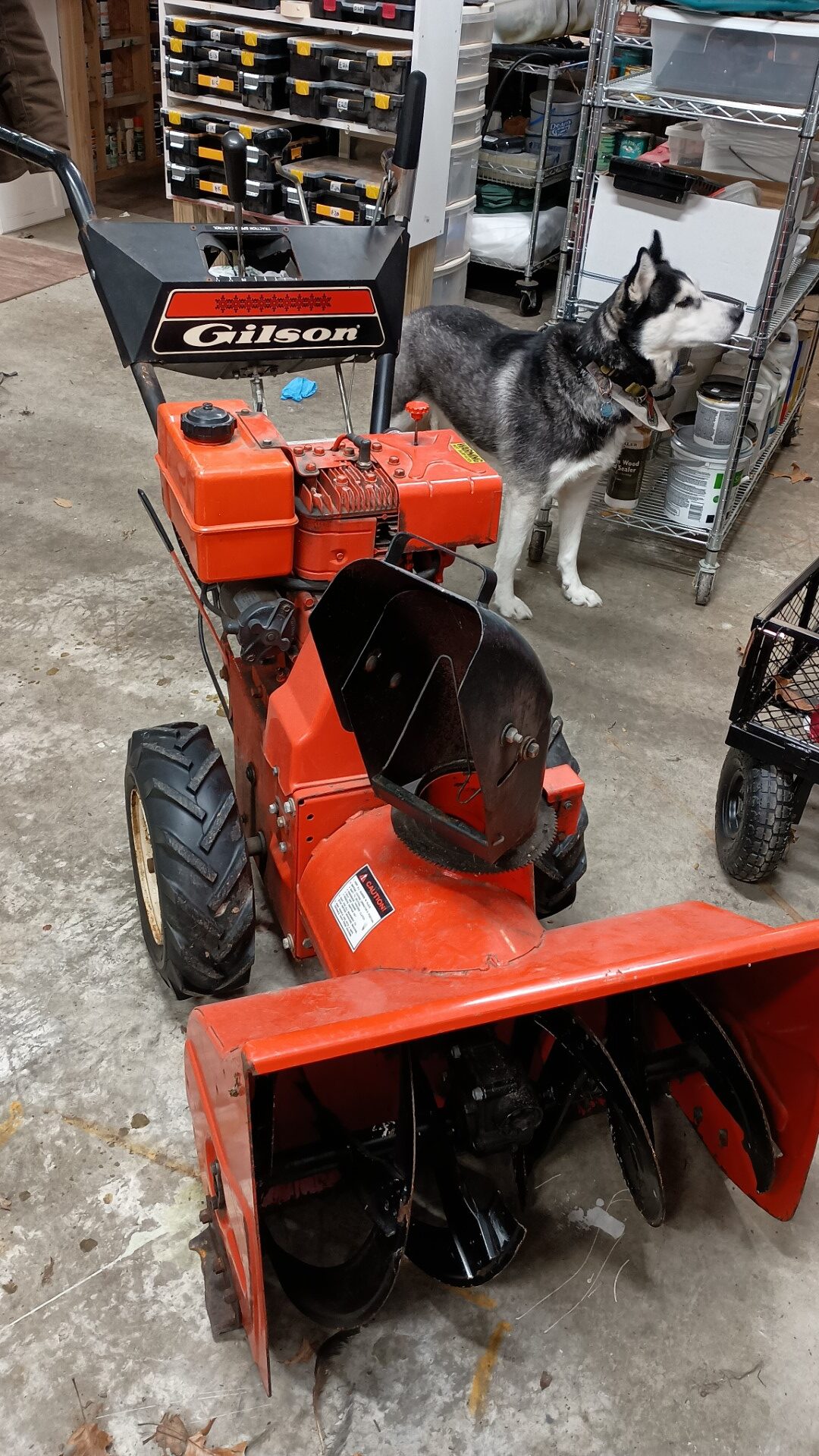
Gilson Snow Blower
It has an electric starter motor with an AC plug that makes starting it a breeze.
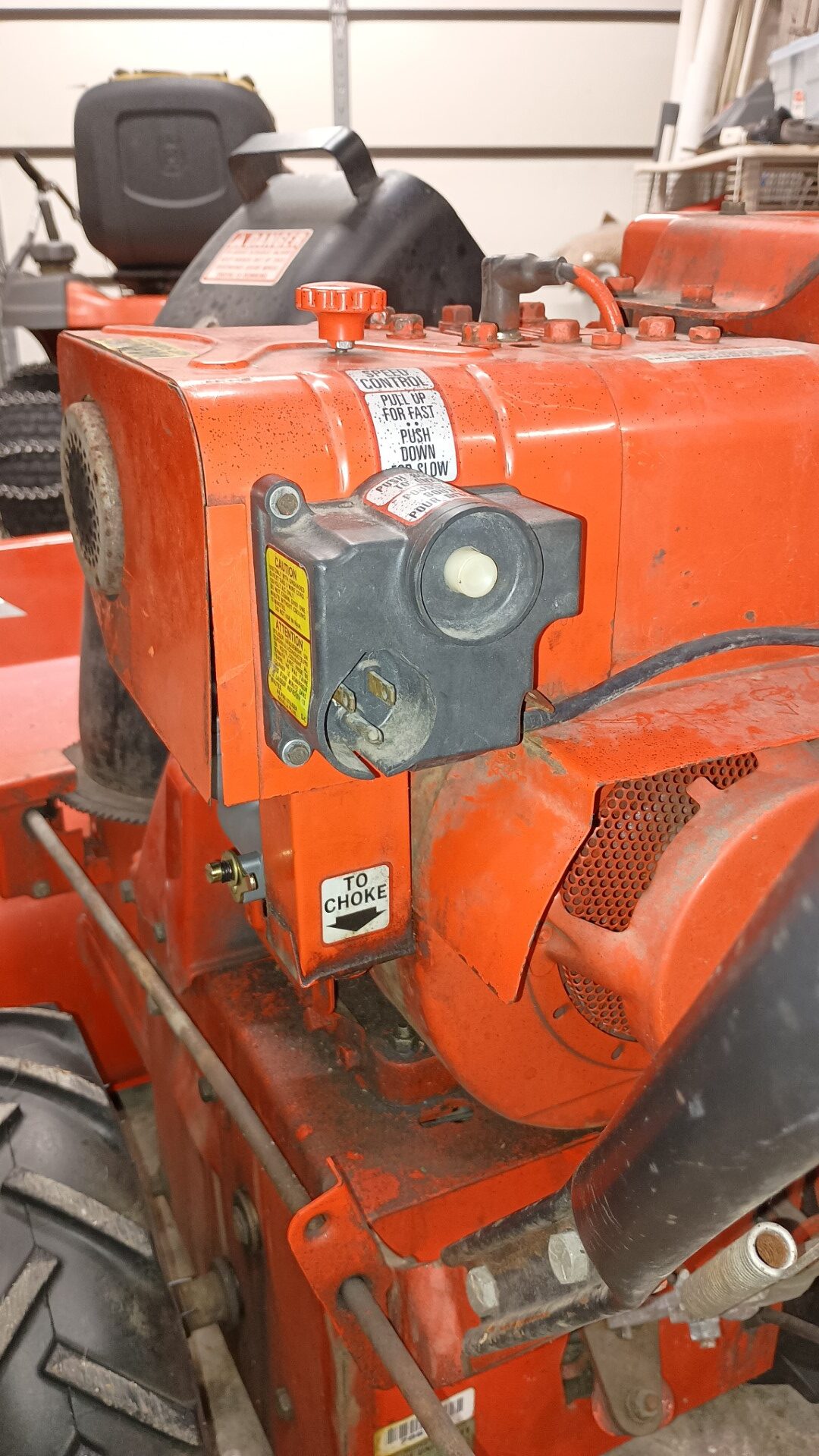
Electric Start
I put some gas in it, plugged it in, and pushed the start button. It turned over and almost immediately fired up. Then it died. I played with the throttle and choke, and it would fire up, run for a few seconds, and then die. OK, carburetor needs cleaning and adjusting.
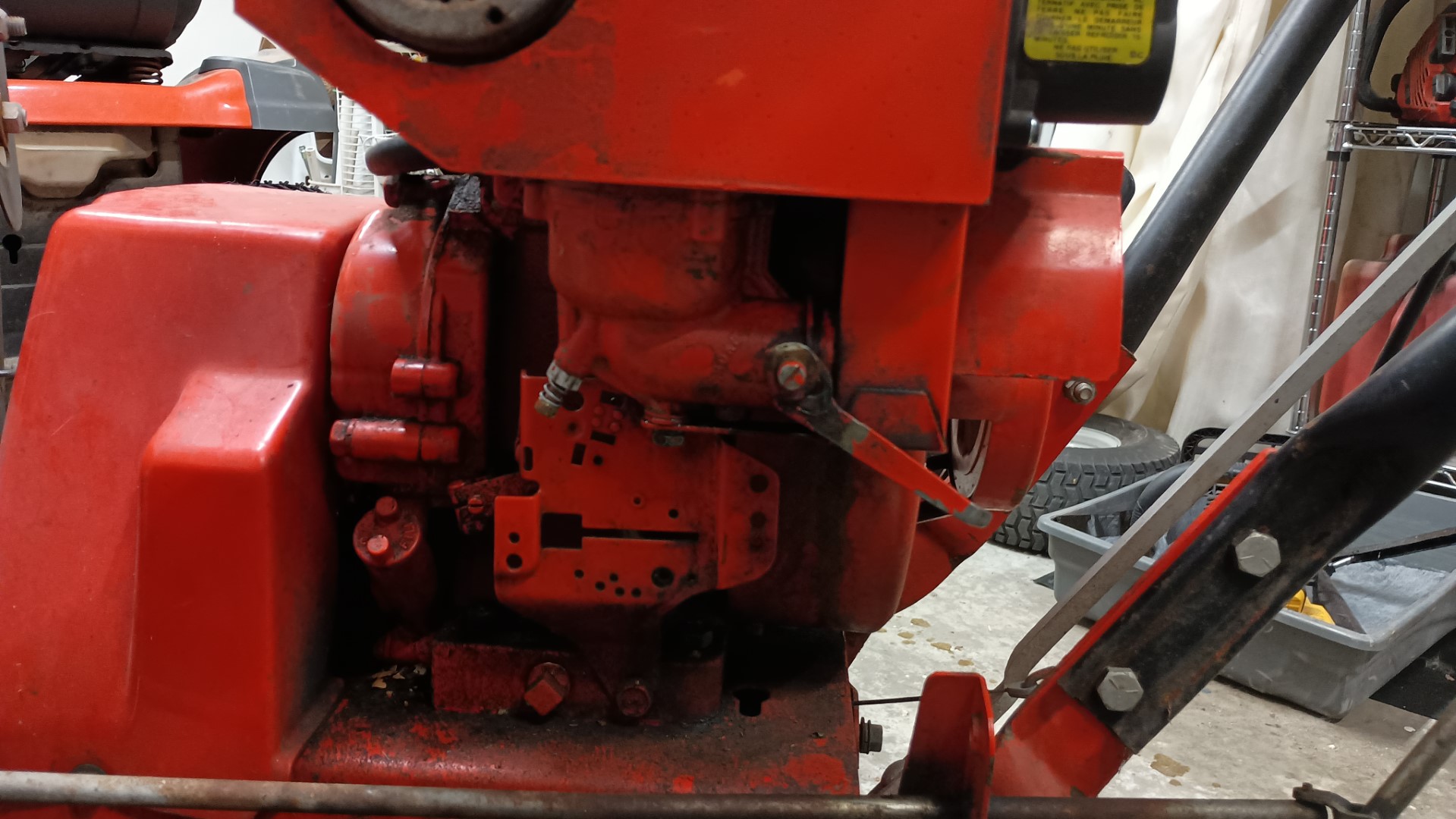
Original Carburetor
The carburetor is a Briggs & Stratton FloJet, another tried and true piece of equipment. I took it apart, gave it a good cleaning, adjusted the jets to factory standard, and put it back together. I plugged it in, pushed the starter button, and it fired right up. Took just a little adjustment on the high speed jet to get it running smooth.
We used it that winter and it ran like a tank. It chewed through the snow like nobody’s business. But there were a few more little issues we discovered. The clutch lever would slip out of gear.
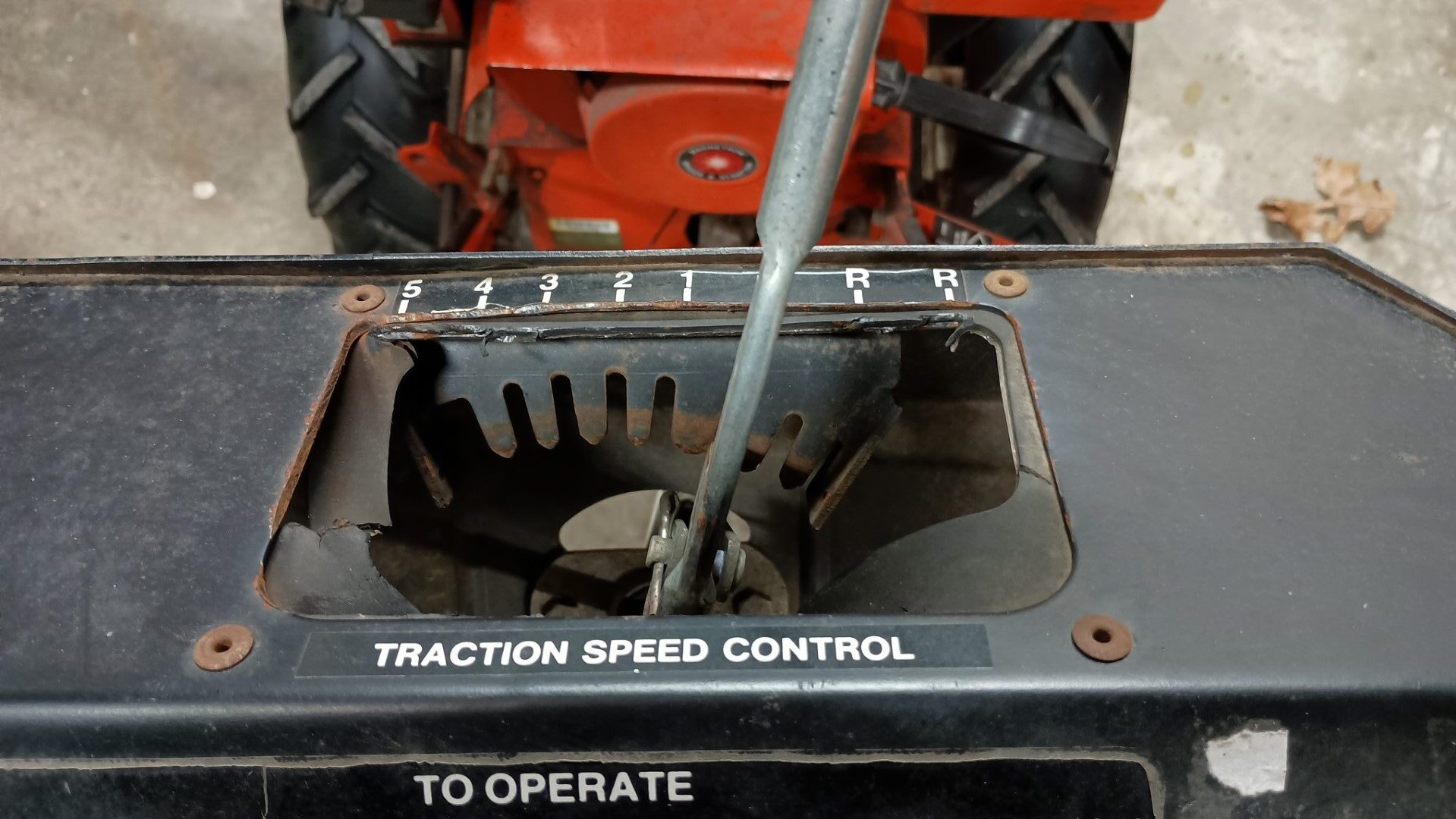
Gears
I couldn’t figure out why it kept doing that, so I would just hold the lever over while blowing snow. It was a pain, but it worked. One problem here is it wouldn’t disengage the clutch, so it couldn’t be put in neutral. That made moving it when it wasn’t running a job.
Another issue is the high speed adjustment on the carb would wiggle loose while running, so if it started running rough, you’d have to tweak that screw to get it to run smooth.
The other issue is it has a bit of a pull to the right, so you kind of have to push it over to keep it going straight.
We don’t use it a lot, because we have a plow on our lawn tractor. It works great, but if the snow is really deep, the Gilson gets called in. Like this year. We’ve gotten a ton of snow. After the first big snow, we were going to take it out so Marisa could use it while I plowed. But it wouldn’t start. We didn’t get it running for that snowfall. But we had another storm coming, so figured I’d better take a look at it.
I couldn’t get it to even fire. It looked like I was going to be checking out that carburetor again. I took it apart, and there was a big ring of ice in the bowl. Turns out that we had kept it outside for part of the summer, and the air intake has a box over it that is open at the top, and during a rain, must have filled with water. After getting that cleaned out and put back together, I tried again and it fired right up. Marisa took it down the hill, and after about 100 yards, it quit. Adjusting the high speed jet would get it to fire, but I couldn’t keep it running.
We had to tow it back to the shop with the tractor. Remember the clutch lever wouldn’t stay in neutral? Yeah, that was a treat towing that thing up a hill.
I decided to order a rebuild kit and just rebuild the carburetor. After looking online for them, I found that you could get brand new knock-off FloJet carburetors for around 20 bucks. Sweet. So that’s what I got.
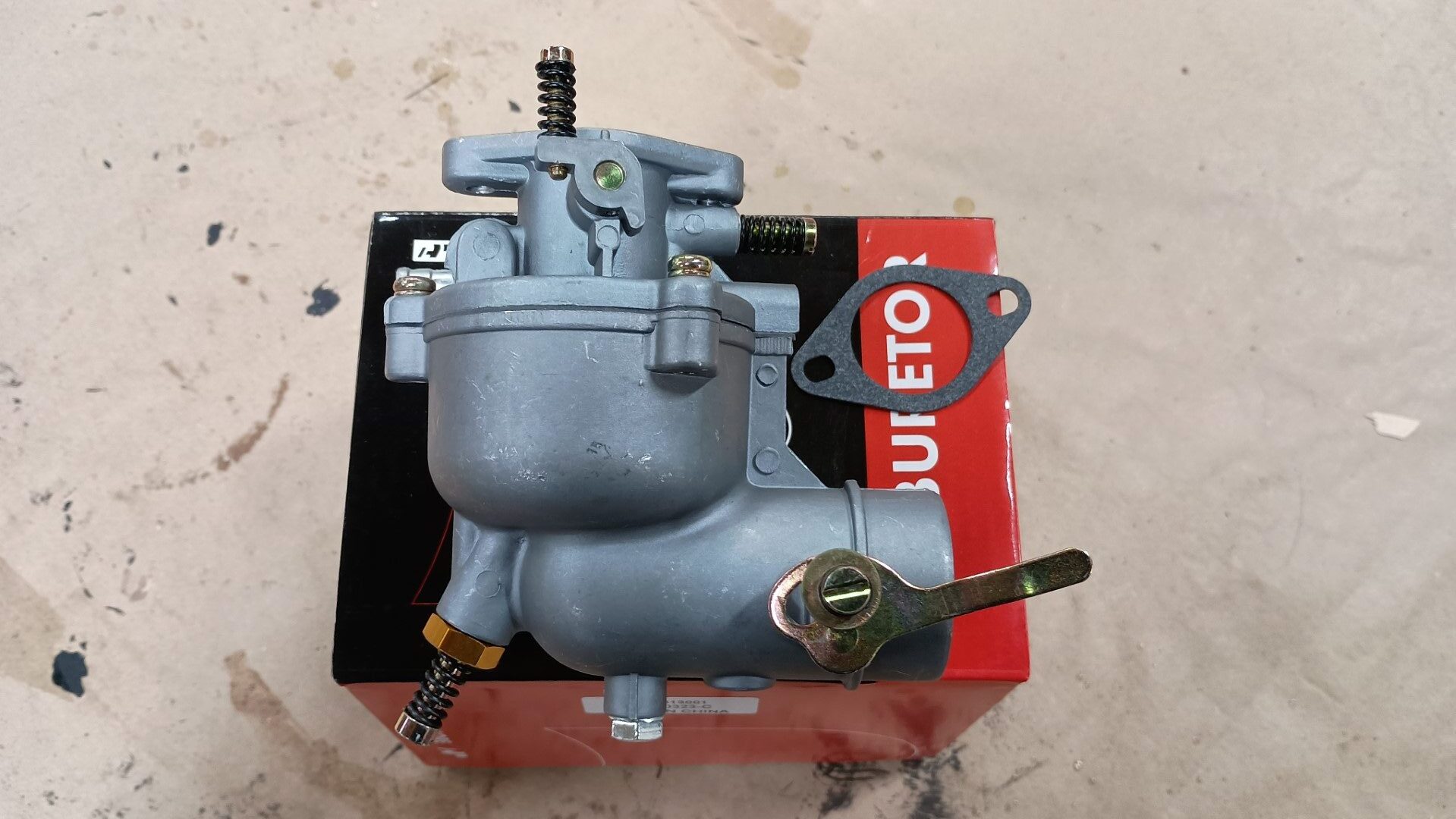
Knock Off FloJet Carburetor
Side by side, they look the same. A few minor differences.
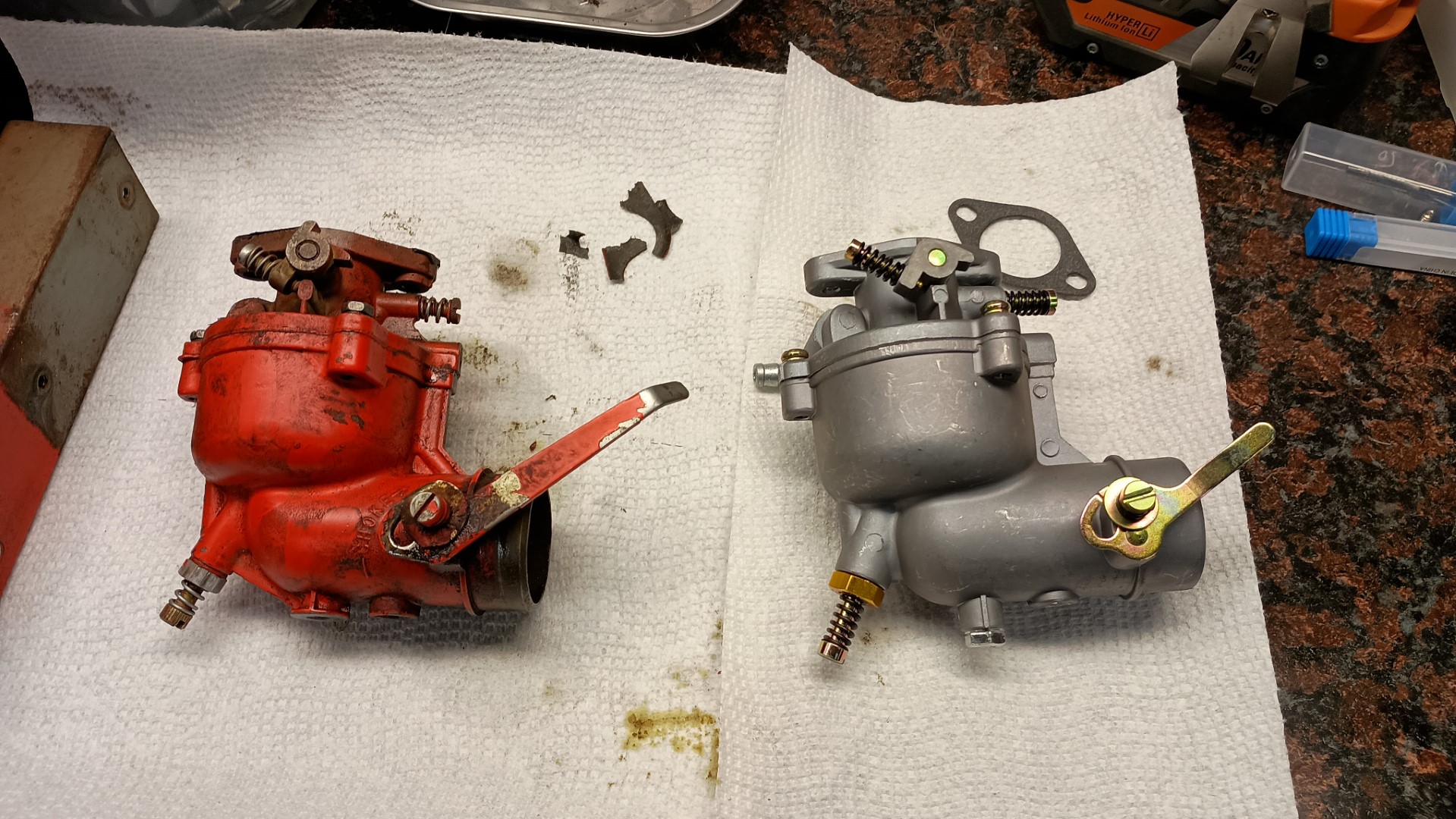
Both Carburetors
One of the differences with this carb is the mounting holes are metric, whereas the original were standard. But I have a large assortment of metric fasteners, and was able to find the right size bolts. I set all of the jets to factory settings, screw all the way in until they just touch, then back out 1 1/2 turns. Then I installed it.
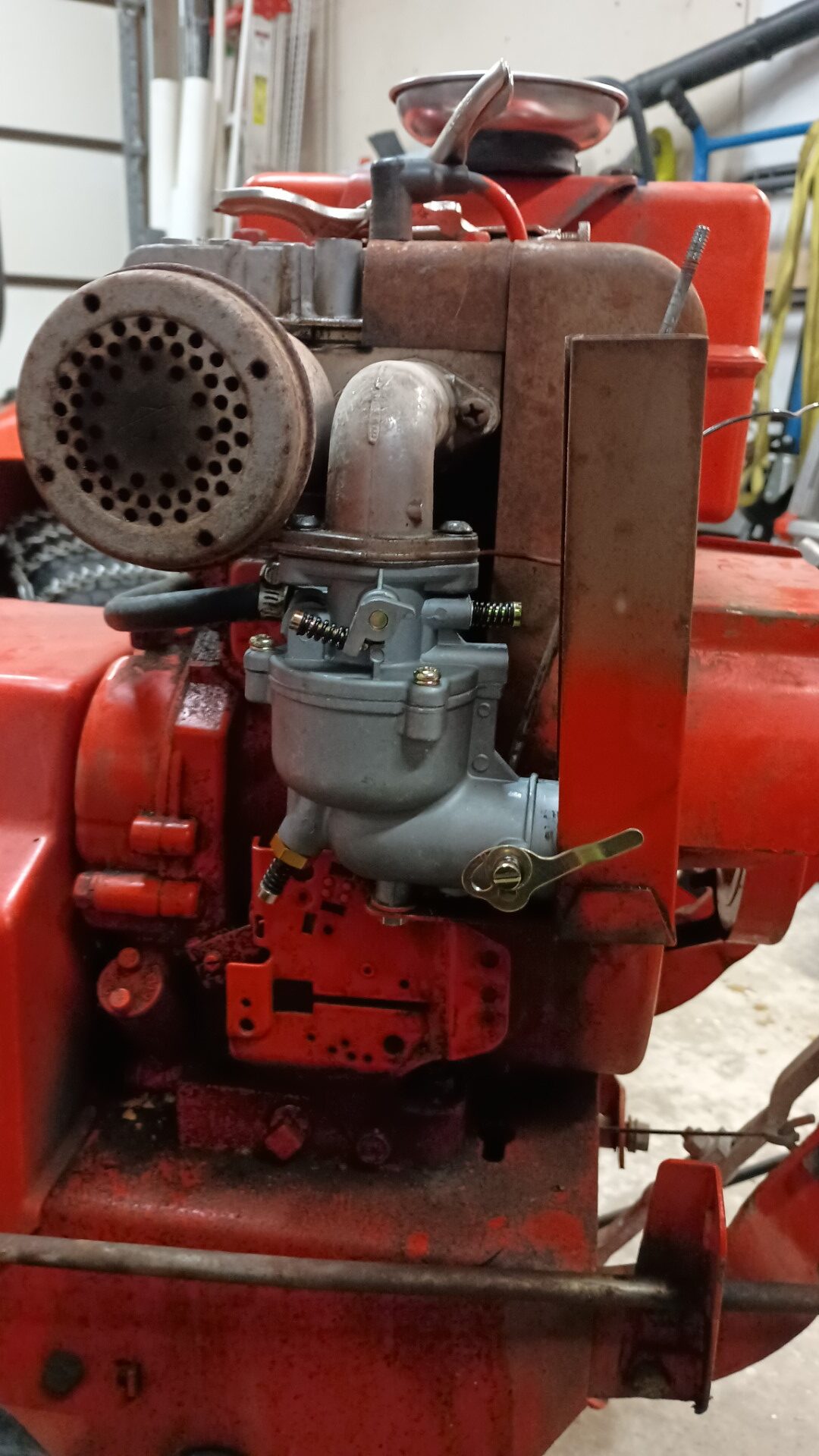
Installed Carburetor
While working on the carb, I discovered the problem with the clutch lever. The head on the handle bars has a metal plate with detents and the clutch lever has a plate that falls into these detents. I noticed that the head piece was welded onto the handle bars, but the welds were broken, and the head piece shifted down about a half inch.
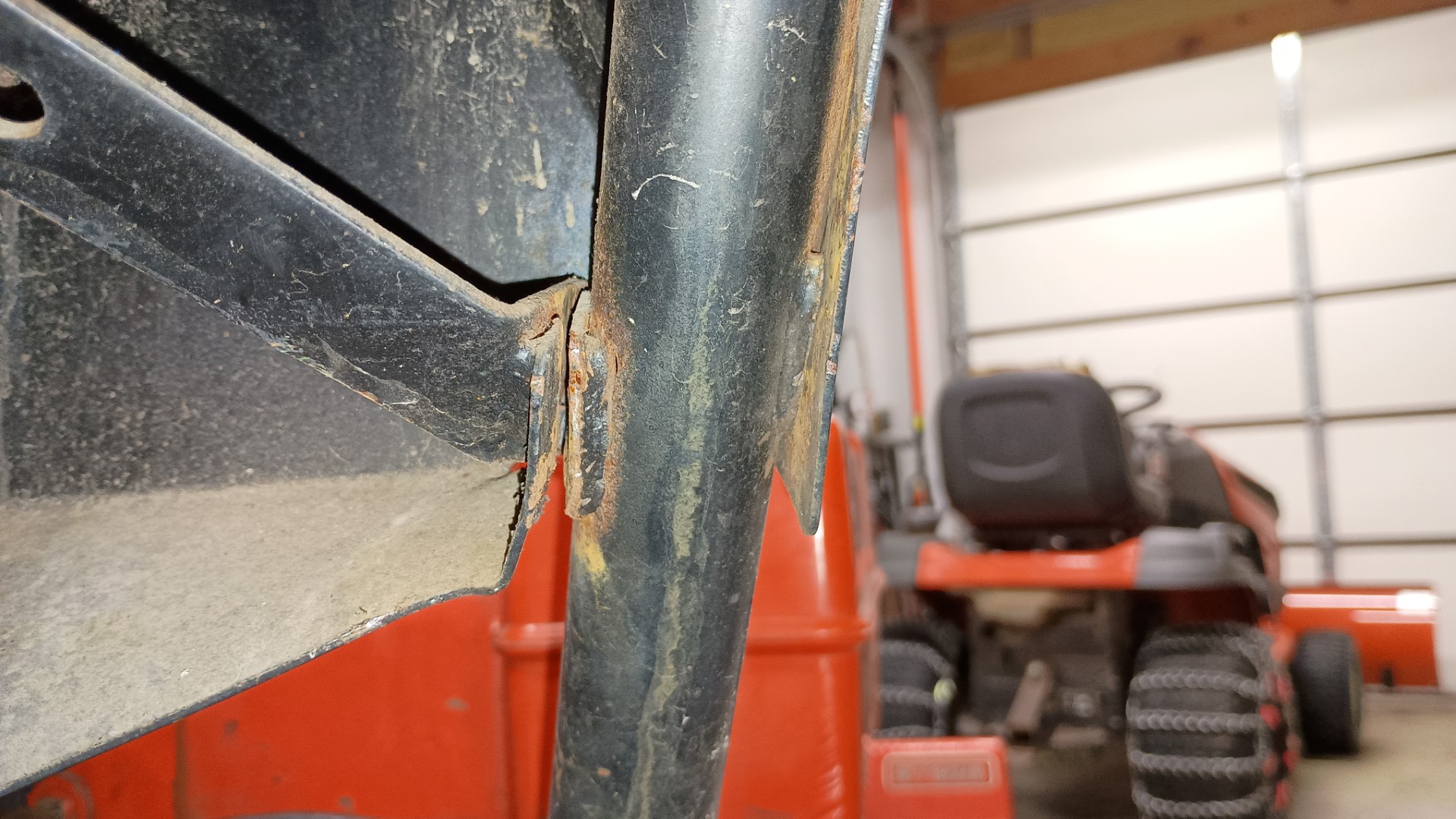
Broken Weld
That was enough to prevent the clutch lever plate from engaging the detents. I put a clamp on it and pulled it back up to where the welds came together, and drilled through the head and the handle bars, and put a bolt through.
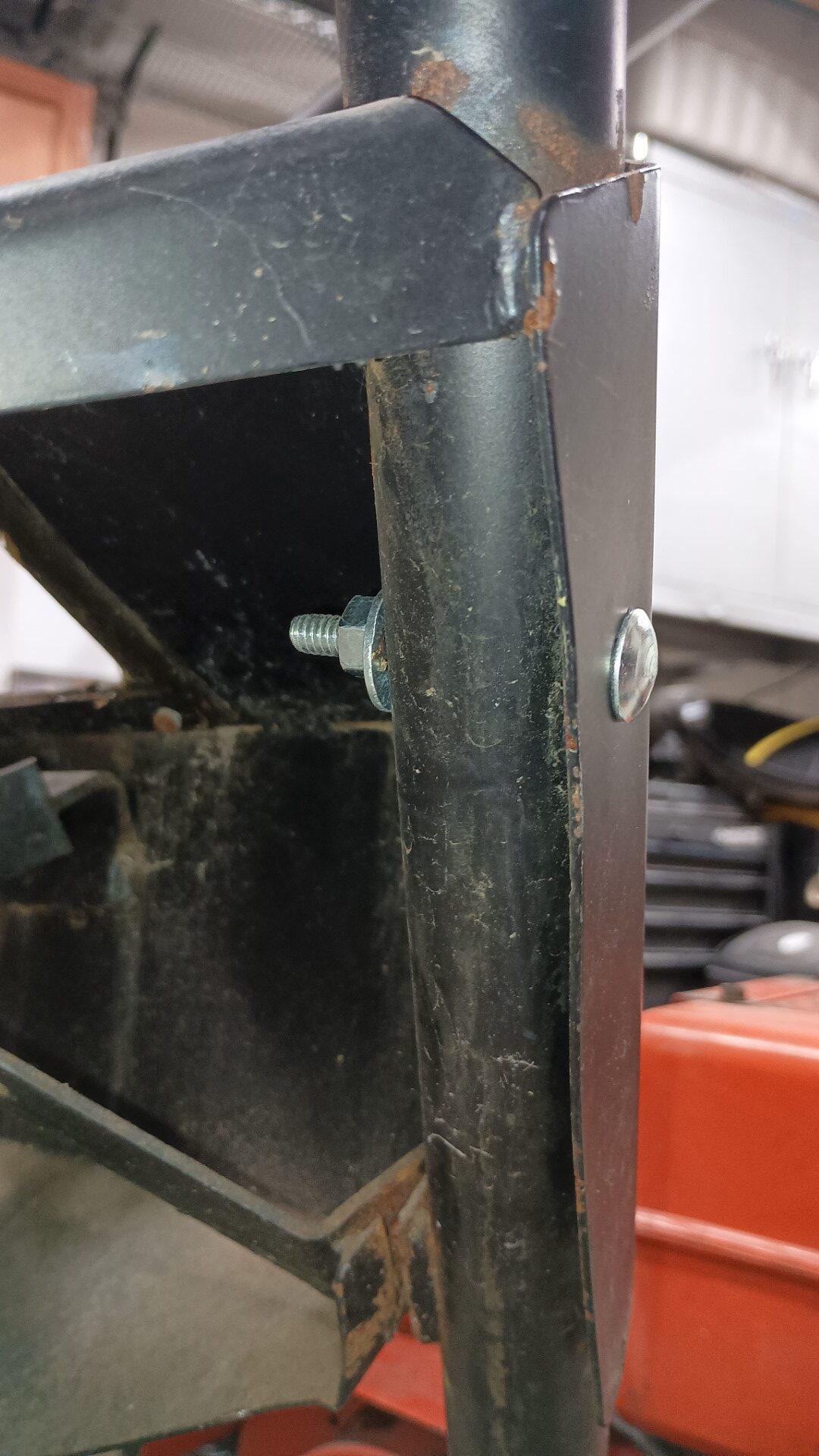
Bolted Head
The clutch lever now fully engages the detents, and I can also put it in neutral and move the machine very easily.
After all the repairs were completed I took it out to make sure everything was working.
I pushed it out, plugged it in, and pushed the starter button. It started right up. I drove it out and blew back the snow banks left from the last plowing. It chewed right through them. All the while, the clutch remained in the gear I put it in. All is well. Except for the pull to the right. Still need to figure out what’s up with that.